
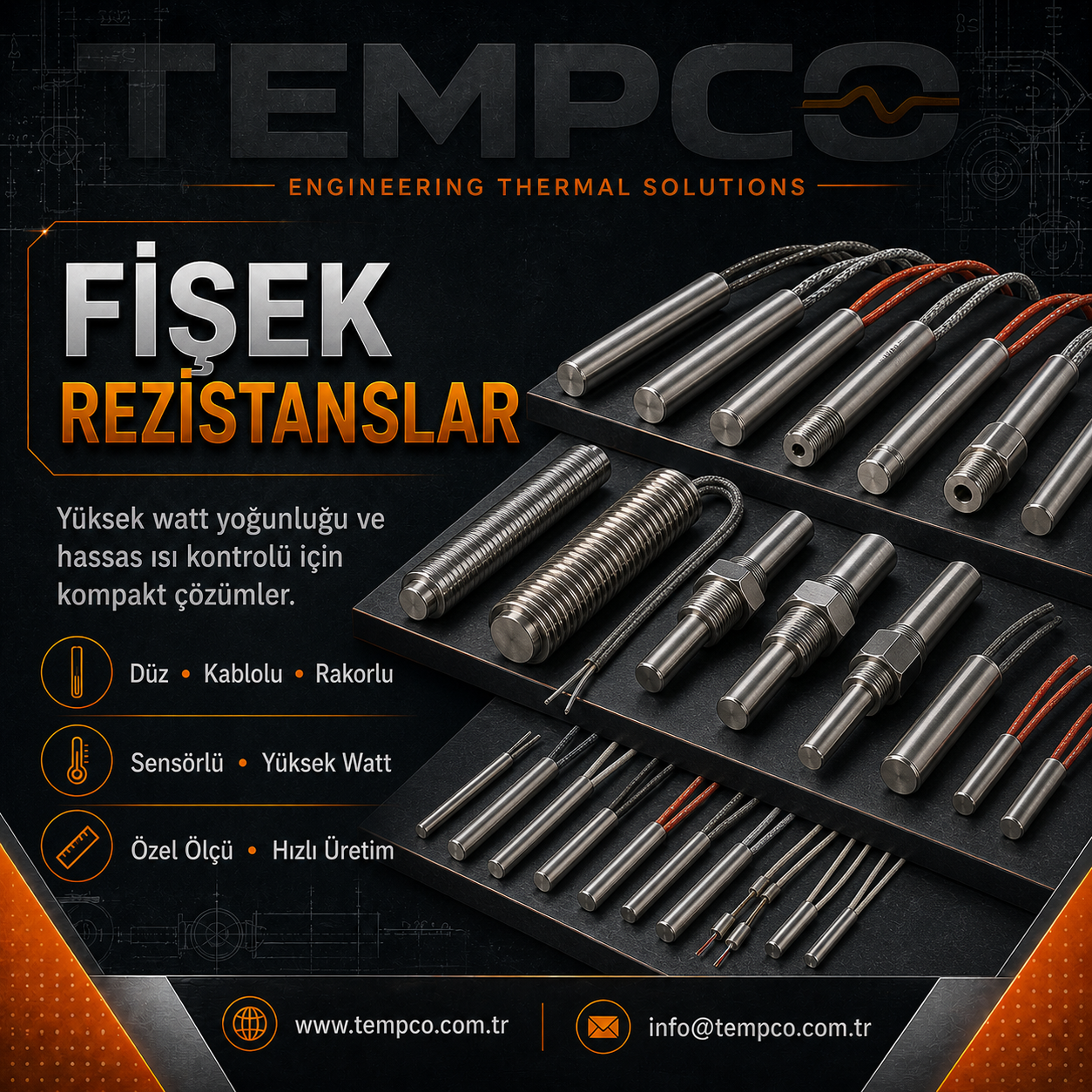
Technical construction of cartridge heaters
A cartridge heater is a compact cylindrical electric heater that can deliver high heat flux in a small diameter. It typically consists of a metal sheath, compacted MgO insulation and resistance wire. Cartridge heaters are widely used in molds, hot runners, heated blocks, packaging machinery, automation equipment and plastics processing applications.
Diameter, length and bore tolerance
One of the most critical parameters is the bore tolerance. Excessive clearance between the heater and the bore reduces heat transfer and increases sheath temperature, which may lead to premature failure. Too tight installation may cause mechanical damage or maintenance difficulties. The correct diameter should be selected according to block material, temperature and service conditions.
Watt density and temperature limit
For cartridge heaters, watt density is often more important than total wattage. High watt density provides fast heat-up, but poor contact may create hot spots. Lower watt density can offer safer operation but slower heating. Target temperature, heat-up time, block mass, thermal losses and control method must be evaluated together.
Sheath material and insulation
Stainless steel sheaths are widely used in general applications. Special alloys can be selected for aggressive temperature or atmosphere conditions. The quality of compacted MgO insulation is important for dielectric strength and heat transfer. Insulation resistance should be checked before commissioning in humid or stored heaters.
Lead exit and cable protection
The lead exit is one of the most sensitive areas of a cartridge heater. Straight leads, armored leads, braided cable, 90° exit, plug connection or custom terminals can be selected depending on the application. In moving systems, mechanical protection and correct cable routing are essential.
Cartridge heaters with integrated sensors
A thermocouple or PT100 can be integrated into the cartridge heater when compact measurement is required. However, the measured point should be evaluated carefully because it may not always represent the actual process temperature. For precise processes, a separate sensor may provide better control.
Failure causes and service life improvement
- Poor heat transfer due to loose bore tolerance
- Excessive watt density or uncontrolled operation
- Mechanical stress at the lead exit
- Moisture, contamination or low insulation resistance
- Incorrect voltage or wiring
- Sensor position not representing the process
Information required for quotation
Diameter, total length, heated length, voltage, power, lead length, lead type, exit direction, sensor requirement, operating temperature, bore tolerance and drawings or samples are required for accurate quotation and manufacturing.
Quotation and engineering support
We can evaluate the correct heater type, watt density, sheath material and connection details for your application. Share your drawings, samples or operating conditions to request a quotation.